
 Checked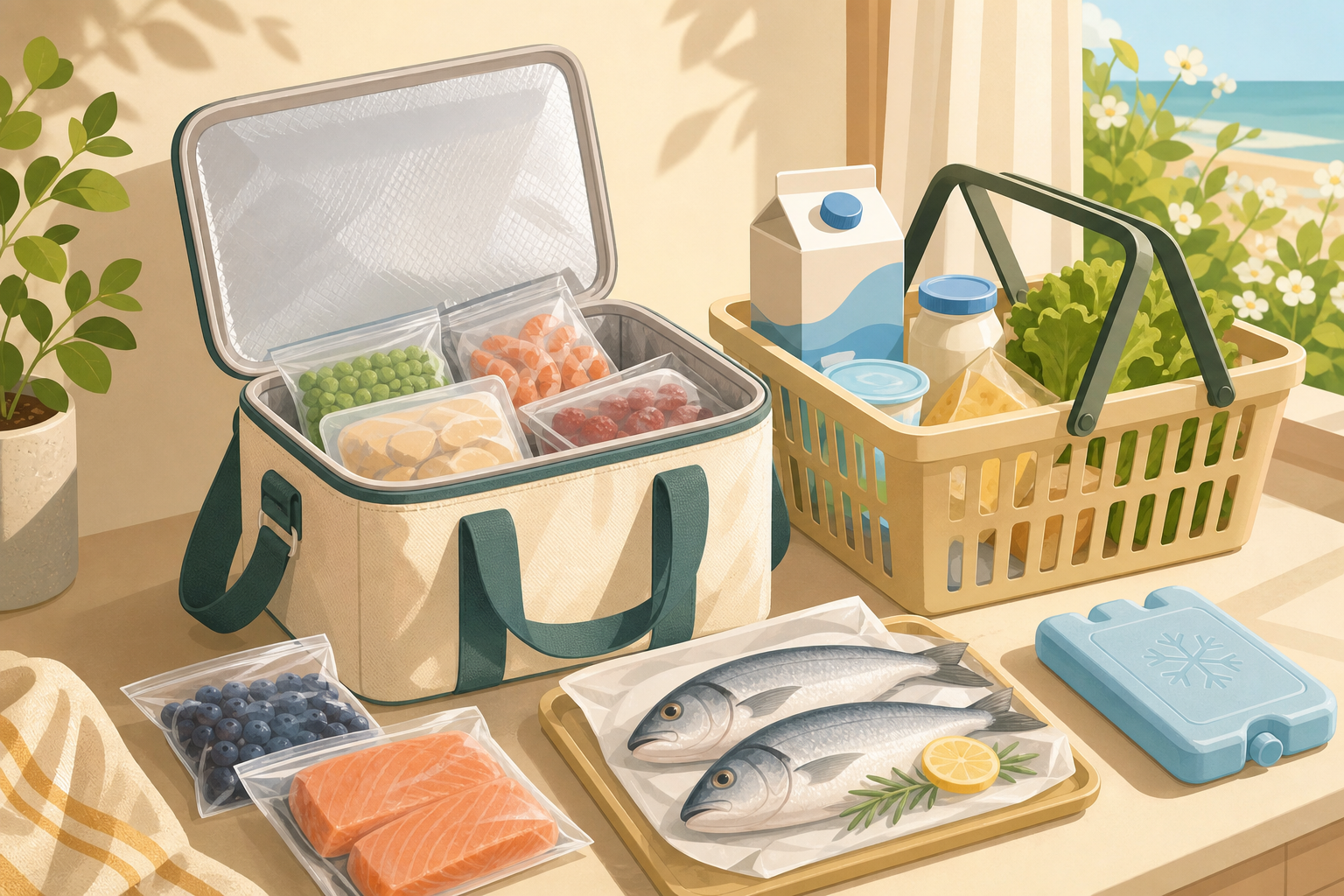
Ingredients
- An insulated cooler bag
- On hot days: one or two ice packs
- A shopping list so you do not spend extra time in the store
- Space ready in your fridge and freezer before you leave
How to do it
Shop for unrefrigerated items first: drinks, tins, dry goods, household products, and produce that does not need chilling. Leave meat, fish, seafood, dairy, fresh pasta, ready meals, and frozen food until the very end.
Keep frozen items together in the cart. They help each other stay cold and thaw more slowly. At checkout, pack them straight into the cooler bag, ideally next to the ice pack. Add refrigerated items too if there is enough room.
Why it helps
Cold slows bacterial growth. The longer sensitive food warms up, the more you risk safety issues, quality loss, and shorter shelf life. Raw animal products, chilled ready meals, and food that will not be cooked hard later deserve the most caution.
In real life, the cold chain usually breaks after the supermarket: in the parking lot, inside a warm car, or during a quick extra errand. That is exactly where the cooler bag earns its place.
Mistakes to avoid
Do not leave groceries in the car, even briefly. A parked car can become much hotter than the outside air. If you want coffee, fuel, or another stop, do it before buying chilled food.
When you get home, unpack immediately: frozen food into the freezer, refrigerated food into the fridge. If meat, fish, or ready meals arrive warm, swollen, heavily thawed, or smell suspicious, be strict. With high-risk food, throwing it away beats hoping it is fine.
Sources
Selected references used to verify or support this tip.
- FoodSafety.gov: 4 steps to food safety FoodSafety.gov · government
- USDA FSIS: Leftovers and Food Safety USDA FSIS · government