
TL;DR
Choose light, loose cotton or linen when it is hot. It feels airier and helps your body cool itself more comfortably.
Checked 1 source Season: Summer, Cooling season
 Checked
 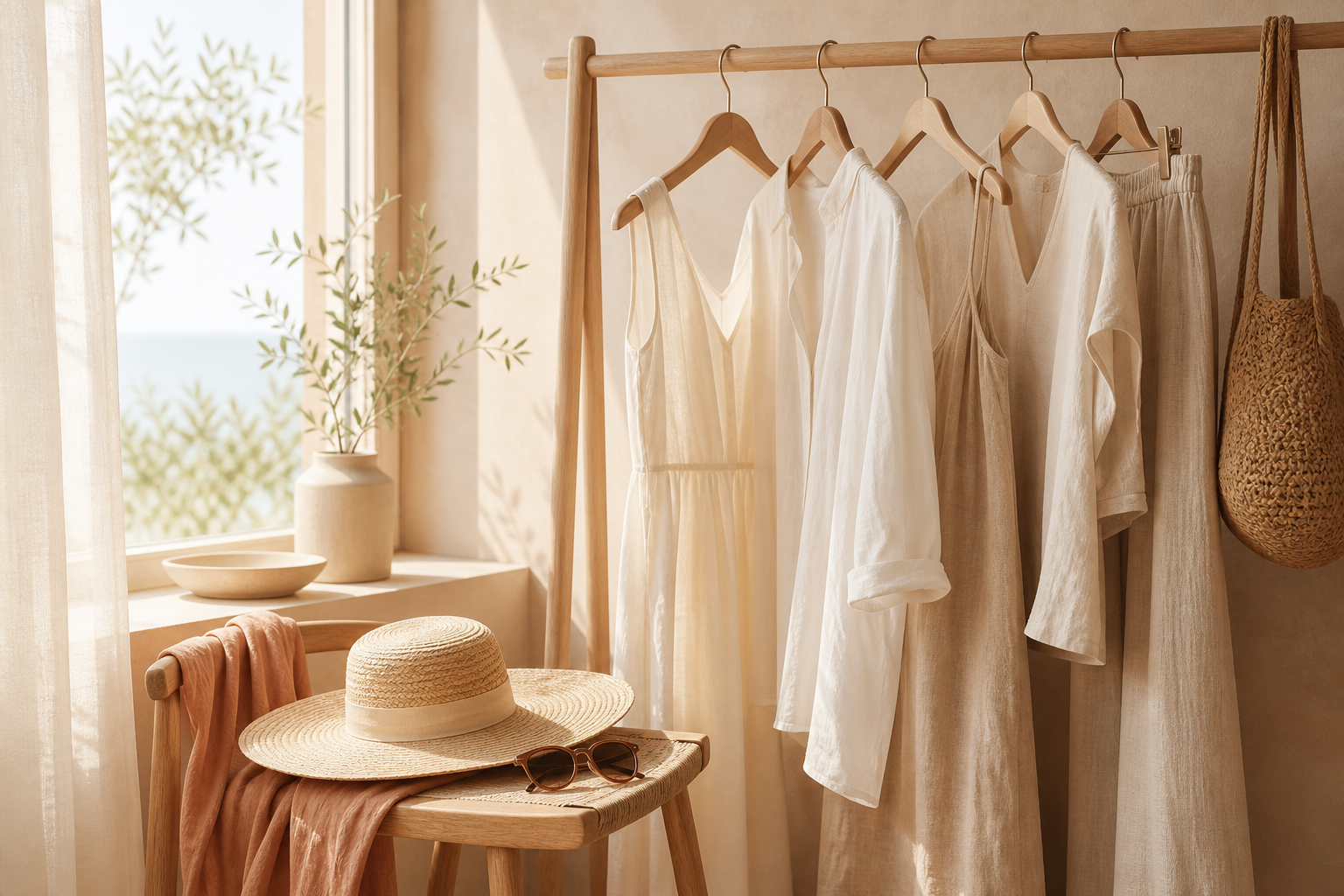 ## How to do it On hot days, start with light-colored, loose-fitting clothes. A white or pale blue shirt, a relaxed linen top, or a thin cotton tee often feels less sticky than tight synthetic fabric. Leave a bit of air between fabric and skin: loose cuts usually help more than a perfect outfit. If you are outside, pair the clothes with a hat, sunglasses, and sunscreen. Clothing does not automatically replace sun protection, especially when the fabric is thin or you spend longer in direct sun. ## Why it helps Light colors absorb less direct heat from the sun than dark colors. Loose clothing lets air move around your body and makes it easier for sweat to evaporate. That evaporation is one of the ways your body cools itself. Cotton and linen can feel comfortable in everyday heat because they absorb moisture and may cling less than some synthetic fabrics. That is not true for every garment, but it is a practical starting point when the weather is hot. ## Good combinations For office or daily use: a light linen shirt, loose cotton trousers, and breathable shoes where appropriate. For time in the sun: add a light hat, sunglasses, and a water bottle. For sport: technical fabric may be better than cotton because it dries faster. ## What to watch Not every natural fabric gives strong UV protection. Very thin or loosely woven clothes can still let sunlight through. If you overheat easily, take medication, or have circulation issues, treat heat warnings seriously and plan shaded breaks.
Sources
Selected references used to verify or support this tip.
- About Heat and Your Health Centers for Disease Control and Prevention · government