
 Checked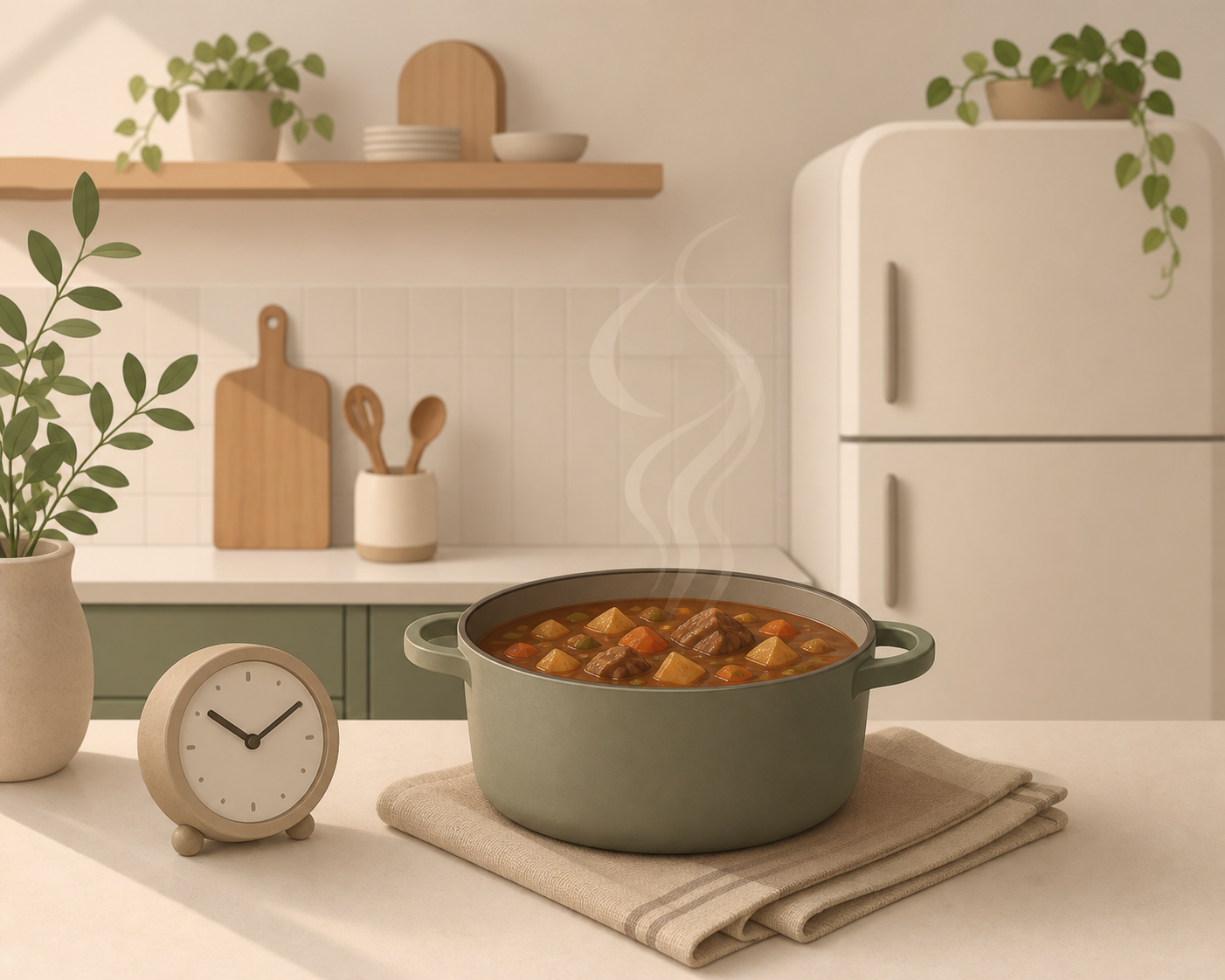
Ingredients
- Leftovers that were cooled quickly and stored in the fridge after cooking
- A clean pan, pot, oven dish, or microwave-safe container
- A fridge that is actually cold
- Optional: a kitchen thermometer for risky foods
How to handle it
Only keep reheated leftovers again if the food was handled well before. If it sat warm on the table for hours, the question is not "can I get three more days?" but "should I eat it today or throw it out?" Reheat properly: soups, stews, and sauces should bubble clearly; solid pieces should be hot in the middle. In a microwave, stir, let it stand briefly, and heat again so you do not end up with a volcanic edge and a fridge-cold centre.
Why it works, but only partly
Heat kills many bacteria, which is useful. It does not erase the whole history of the food. Some bacteria can produce heat-stable toxins, and reheating will not reliably undo that. Every warm-cold cycle also gives new microbes a chance, while texture and flavour keep getting worse. So reheating is a safety boost, not a full reset of the leftovers clock.
The practical rule
After reheating, plan on roughly one to two more fridge days, not an automatic fresh three days. The older the dish was before reheating, the shorter its second life should be. Do not repeat the cycle endlessly. If that worked, families would pass the same soup down through generations. Your stomach will not treat that as a charming tradition.
Be stricter with these foods
Be cautious with rice, fish, seafood, minced meat, poultry, cream sauces, and anything that already feels borderline. Cool leftovers in small, shallow containers, put them back in the fridge quickly, and reheat only the portion you need when possible. If the smell, surface, or your instinct says no, listen. Throwing away one portion is annoying; gambling with food poisoning is worse.
Sources
Selected references used to verify or support this tip.
- FoodSafety.gov: 4 steps to food safety FoodSafety.gov · government
- USDA FSIS: Leftovers and Food Safety USDA FSIS · government