
TL;DR
Bake a soft, golden Swiss braided loaf with the right kneading, proofing, glazing, and fixes for the most common dough problems.
Season: All year
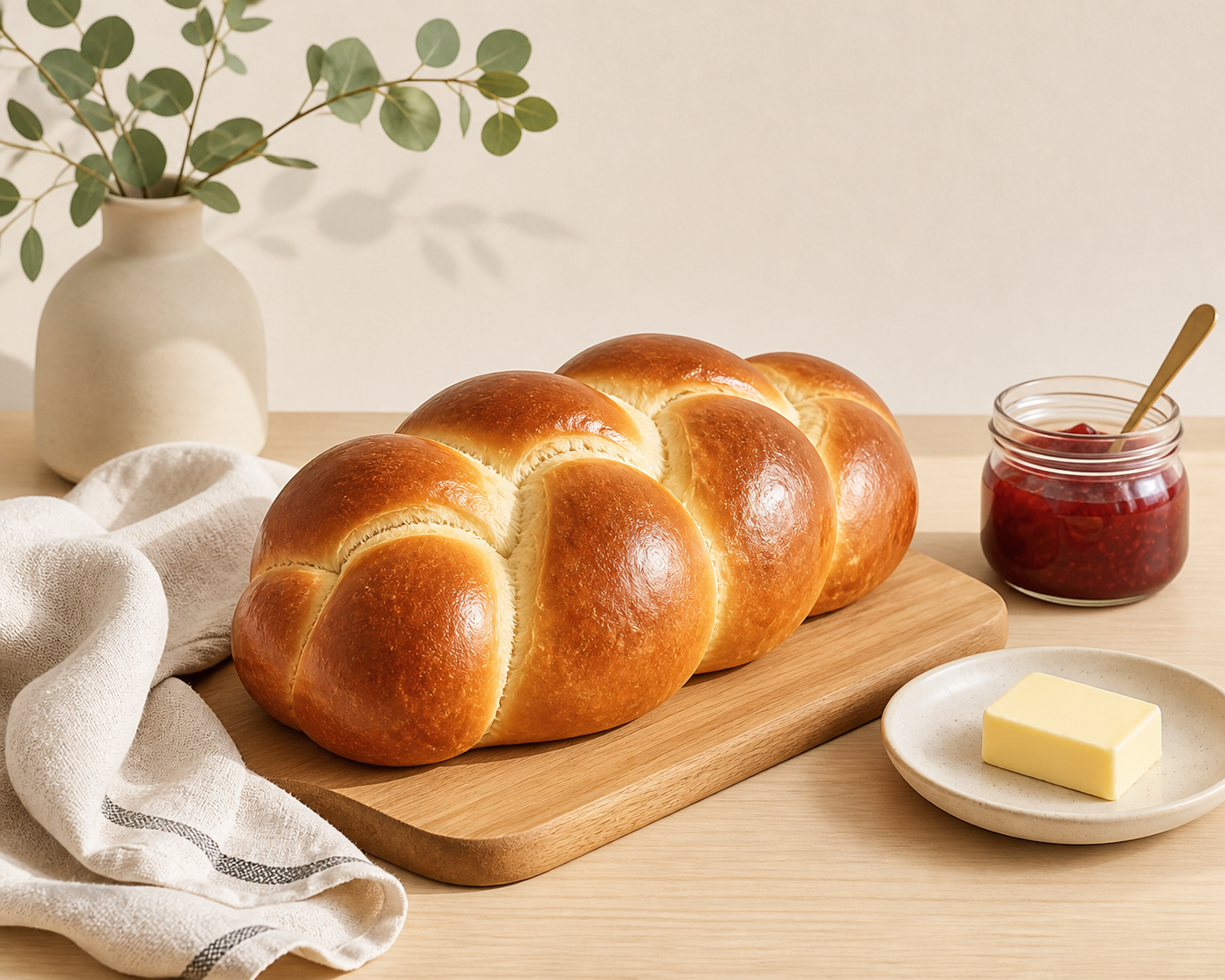 ## Ingredients For one large Swiss Zopf, use 500 g strong white bread flour or all-purpose flour, 1.5 teaspoons salt, 1 teaspoon sugar, 20 g fresh yeast or 7 g dry yeast, 60 g soft butter, and 300 ml lukewarm milk. For the glossy finish, whisk 1 egg yolk with 1 tablespoon milk or cream. ## Make the dough properly Mix the flour, salt, and sugar first. Crumble the yeast straight into the flour, then add the butter pieces and lukewarm milk. Knead for 8 to 10 minutes until the dough is soft, smooth, and elastic. This is the step that makes the bread fluffy instead of dense. The dough should spring back slightly and feel supple, not dry. Cover it and let it rise at room temperature for about 1.5 to 2 hours, until roughly doubled. ## Braid, glaze, and bake Divide the dough into two equal pieces and roll each one into a strand about 70 cm long, with slightly thinner ends. Cross the strands and braid them loosely into the classic Zopf shape. Brush the loaf with the egg-yolk mixture, let it rise for another 30 minutes, then brush it again just before baking. Bake at 200 °C conventional heat in the lower half of the oven for about 35 minutes. The loaf is done when the underside sounds hollow when tapped. ## Avoid the common mistakes If your Zopf does not rise, the milk may have been too cold, too hot, or the yeast may have been old. Lukewarm means warm to the touch, never hot. If the loaf collapses or spreads in the oven, the first rise was probably too long. Once it has roughly doubled, braid it. If it browns outside but stays doughy inside, lower your trust in the timer and use the hollow-sound test. ## Easy variations For a savory bacon Zopf, knead in 160 g crisp, cooled bacon cubes and reduce the salt slightly. For a sweeter Sunday loaf, use 3 tablespoons sugar and add raisins or chocolate pieces. Leftovers are excellent toasted, turned into French toast, or served with butter and jam the next morning.